Yarrow
Family: Asteraceae - Genus: Achillea - Species: A. millefolium
Other names: Common Yarrow, Milfoil, Soldier's Woundwort, Nosebleed
Quick facts
- Uses
- Medicinal
- Tea
- Wildlife
- Edible parts
- leaf, flower
- Type
- perennial herb
- Flowers
- Apr–Oct
- Height
- 30–90 cm
- Native to
- Northern Hemisphere
- Habitat
- fields, roadsides, meadows
| Month | Observations |
|---|---|
| January | 78 |
| February | 73 |
| March | 198 |
| April | 1056 |
| May | 1793 |
| June | 3797 |
| July | 3878 |
| August | 1880 |
| September | 959 |
| October | 582 |
| November | 362 |
| December | 100 |
Yarrow is one of the oldest medicinal herbs we know of. Its Latin name, Achillea, comes from the legend that the Greek hero Achilles used it to treat his soldiers' wounds. It still grows almost everywhere in the Northern Hemisphere: in fields, on roadsides and in gardens.
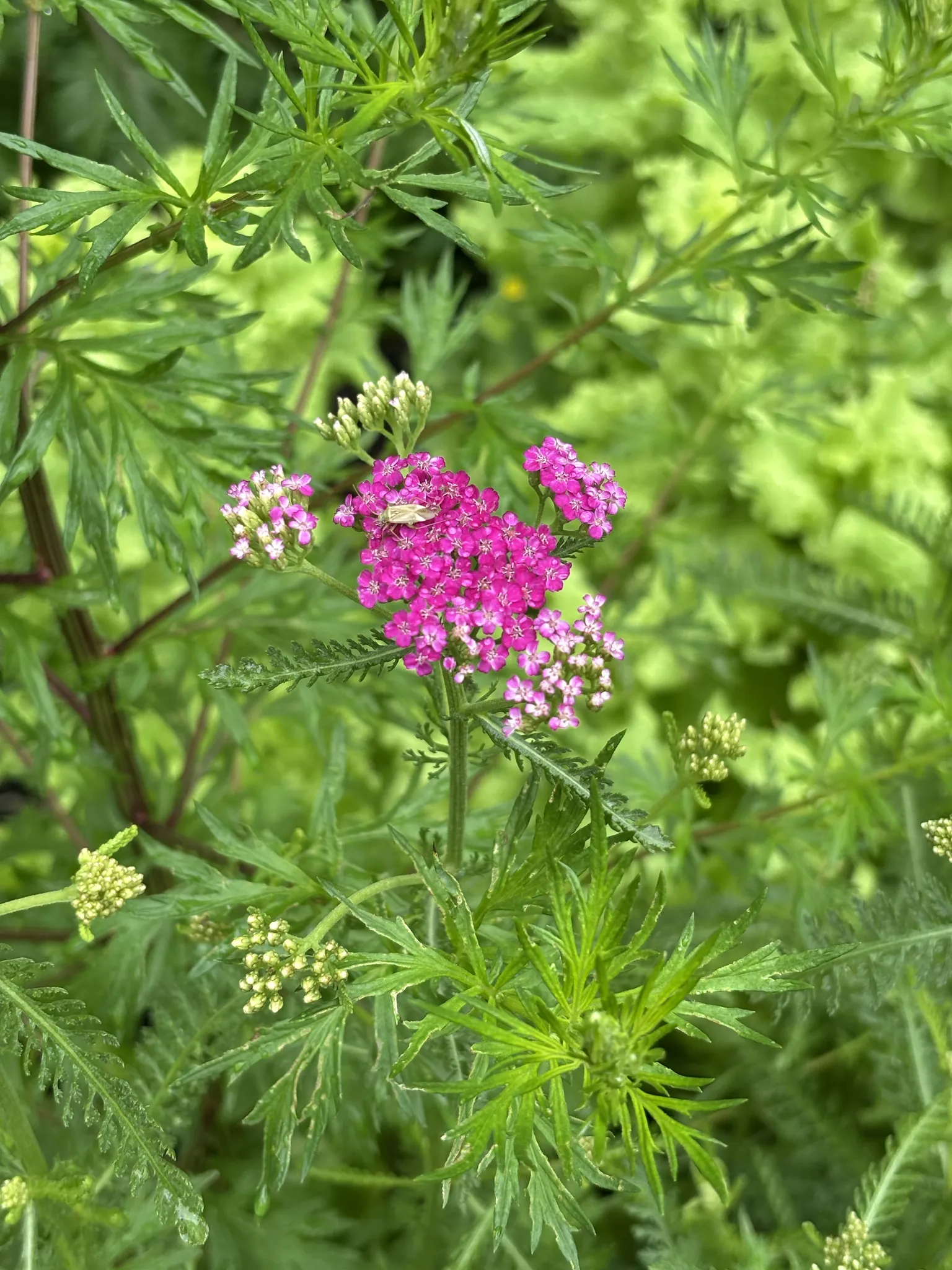
Wild yarrow has white flowers. The pink one in the photo is a garden form of the same species.
How to spot it
- Leaves are soft and feathery, cut into many tiny segments. The name millefolium means "thousand leaves".
- Flowers are small daisies, each about 5 mm across, packed into flat-topped clusters.
- The smell is strong and spicy when you crush a leaf.
- Stems are tough, upright and a little hairy, 30–90 cm tall.
What it's good for
Yarrow's best-known use is to stop bleeding. Crushed fresh leaves have been pressed onto small cuts for thousands of years, which gave it names like "soldier's woundwort" and "nosebleed".
As a tea, it's a traditional remedy for colds and fevers, often mixed with elderflower and peppermint. Young leaves are edible in small amounts and have a bitter, peppery taste.
Many small bees, wasps and hoverflies visit the flowers.
Don't confuse it with
Poison hemlock, water hemlock and other members of the carrot family also have flat clusters of tiny white flowers. Look closely: yarrow's flowers are miniature daisies, and its leaves are fine, soft and feathery.
Gallery
Pink garden form with flat-topped flower clusters and feathery leaves
Where it grows
Each hexagon shows how many times Yarrow has been recorded there, from herbarium specimens, surveys and iNaturalist photos. Gaps can mean nobody has looked, not that the plant is absent.