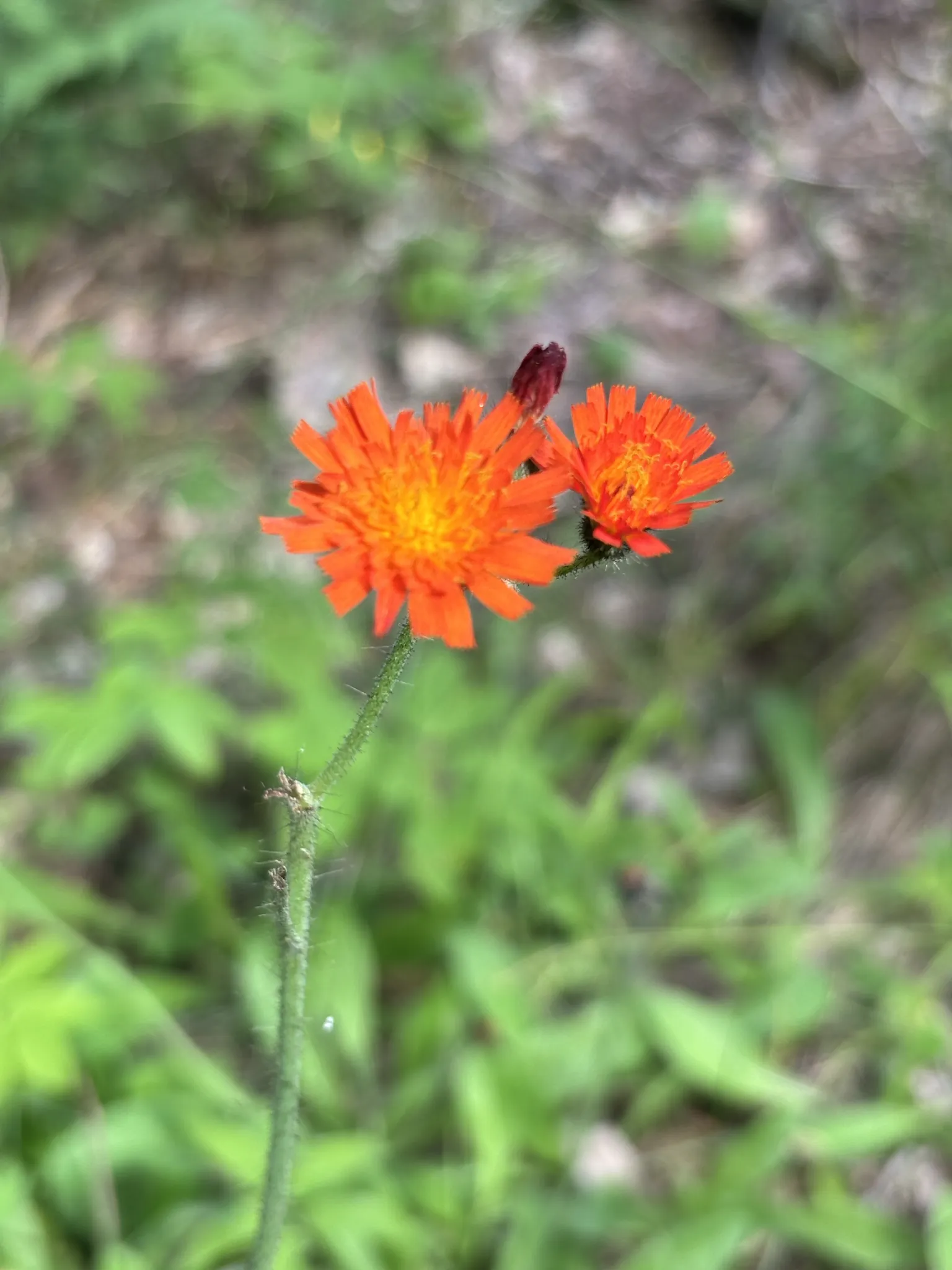
Orange Hawkweed
Family: Asteraceae - Genus: Pilosella - Species: P. aurantiaca
Other names: Devil's Paintbrush, Fox-and-cubs, Hieracium aurantiacum
Quick facts
- Uses
- Wildlife
- Edible parts
- None
- Type
- perennial herb
- Flowers
- Jun–Sep
- Height
- 10–60 cm
- Native to
- Europe
- Habitat
- fields, roadsides, lawns
| Month | Observations |
|---|---|
| January | 0 |
| February | 1 |
| March | 1 |
| April | 0 |
| May | 94 |
| June | 1985 |
| July | 874 |
| August | 541 |
| September | 378 |
| October | 97 |
| November | 4 |
| December | 2 |
Orange hawkweed is hard to miss. Its flowers are a bright, burnt orange that few other wildflowers come close to, which earned it the name "devil's paintbrush". It brightens fields, roadsides and lawns from early summer.
It came from the mountains of Europe as a garden flower and escaped. It spreads by runners and seeds and can take over pastures, so in some places it's listed as a noxious weed.
How to spot it
- Flowers are bright orange to red-orange, with notched petal tips, in a tight cluster at the top of the stalk. Unopened buds are dark red.
- The stalk is leafless and covered in dark, bristly hairs.
- Leaves are long, hairy and spoon-shaped, in a rosette at the base.
- Sap is white and milky if you break the stalk.
What it's good for
Not much for people. It's not a food plant, and it has little history as a medicine. Bees, butterflies and hoverflies do visit the flowers.
Don't confuse it with
Yellow hawkweeds look very similar but have yellow flowers. They're close relatives and just as weedy.
Gallery
Bright orange flower heads on a hairy stalk
Where it grows
Each hexagon shows how many times Orange Hawkweed has been recorded there, from herbarium specimens, surveys and iNaturalist photos. Gaps can mean nobody has looked, not that the plant is absent.