Wild Bergamot
Family: Lamiaceae - Genus: Monarda - Species: M. fistulosa
Other names: Bee Balm, Horsemint
Quick facts
- Uses
- Edible
- Medicinal
- Tea
- Wildlife
- Edible parts
- leaf, flower
- Type
- perennial herb
- Flowers
- Jun–Aug
- Height
- 60–120 cm
- Native to
- North America
- Habitat
- dry meadows, prairies, field edges
| Month | Observations |
|---|---|
| January | 1 |
| February | 0 |
| March | 0 |
| April | 1 |
| May | 63 |
| June | 873 |
| July | 4298 |
| August | 1283 |
| September | 140 |
| October | 18 |
| November | 1 |
| December | 1 |
Wild bergamot is a native wildflower of North American meadows and prairies, and one of the best plants you can grow for bees. In midsummer it's covered in shaggy lavender pompoms that bees, butterflies and hummingbirds visit all day.
It's also called bee balm. Despite the name, it's not related to the bergamot orange that flavours Earl Grey tea, though the leaves smell a little like it.
How to spot it
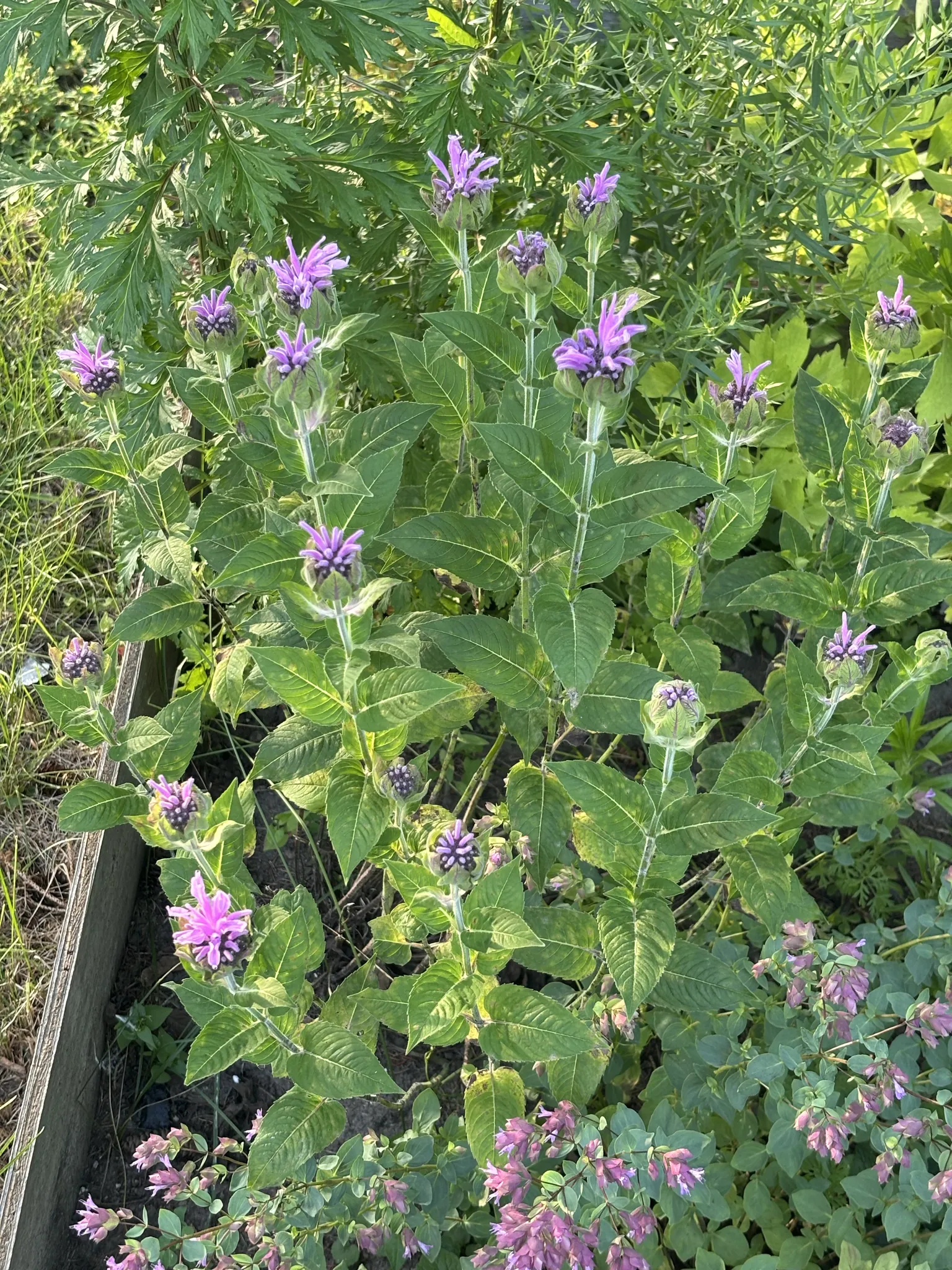
- Flowers are lavender to pale purple, in round, shaggy heads at the top of the stem. Each head is made of many thin, tube-shaped flowers.
- Leaves are opposite, lance-shaped and toothed, and often greyish-green.
- Stems are square, like the rest of the mint family.
- The smell is strong, like oregano and thyme, when you crush a leaf.
What it's good for
The leaves and flowers make a spicy, oregano-like seasoning and a strong herbal tea. Many Indigenous peoples used it for colds, sore throats and fevers. It contains thymol, the same antiseptic oil found in thyme.
It's a wonderful garden plant for pollinators, and it spreads slowly into a clump.
Don't confuse it with
Scarlet bee balm, or Oswego tea, is a close relative with bright red flowers. It grows in wetter places and is used the same way.
Gallery
Lavender pompom flowers in a garden bed
Where it grows
Each hexagon shows how many times Wild Bergamot has been recorded there, from herbarium specimens, surveys and iNaturalist photos. Gaps can mean nobody has looked, not that the plant is absent.