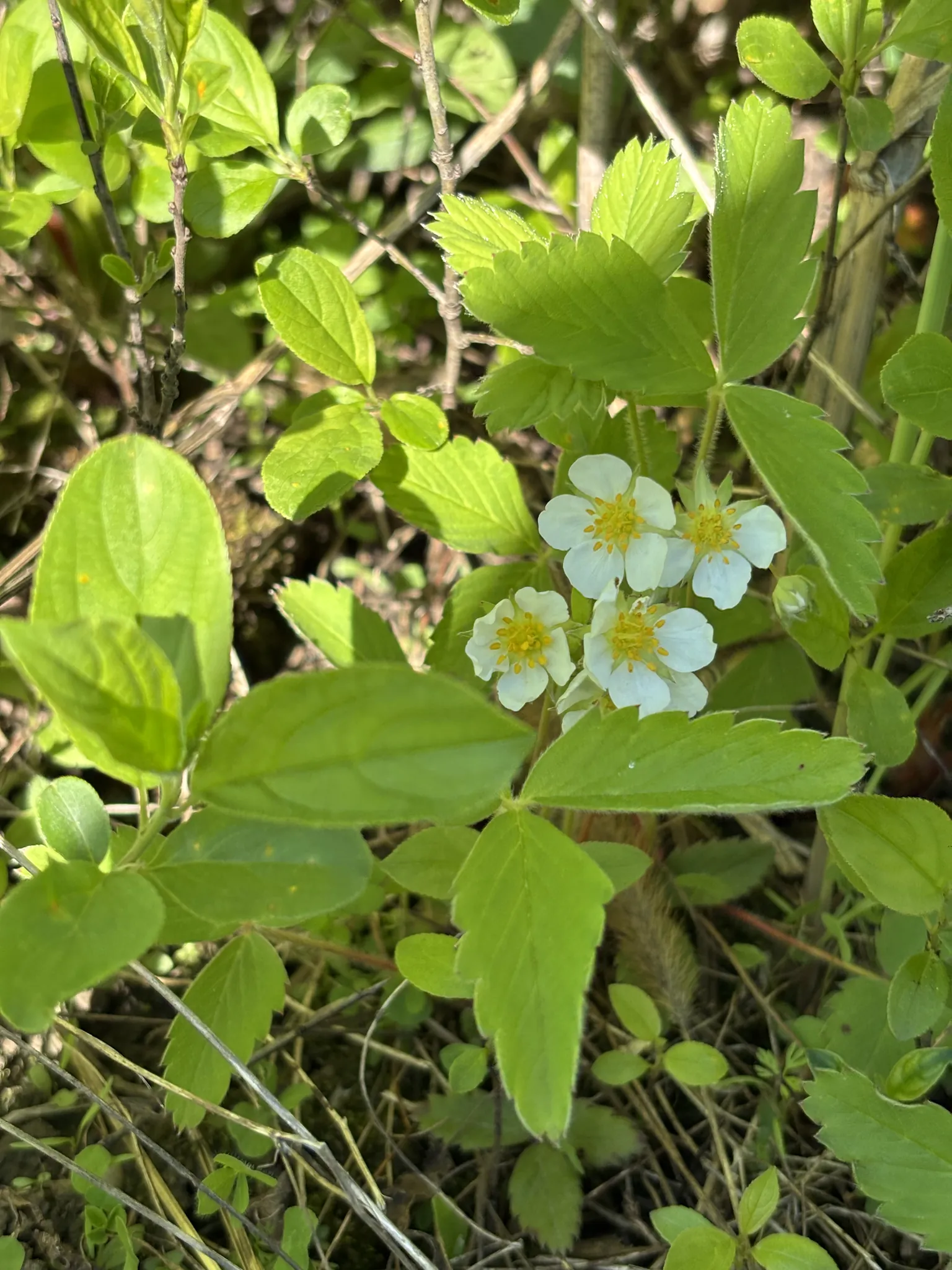
Wild Strawberry
Family: Rosaceae - Genus: Fragaria - Species: F. virginiana
Other names: Virginia Strawberry, Common Strawberry
Quick facts
- Uses
- Edible
- Tea
- Wildlife
- Edible parts
- fruit, leaf
- Type
- perennial herb
- Flowers
- Apr–Jul
- Height
- 5–20 cm
- Native to
- North America
- Habitat
- fields, meadows, woodland edges
| Month | Observations |
|---|---|
| January | 2 |
| February | 3 |
| March | 22 |
| April | 735 |
| May | 3633 |
| June | 1983 |
| July | 559 |
| August | 107 |
| September | 138 |
| October | 76 |
| November | 24 |
| December | 5 |
Wild strawberries are tiny, often no bigger than a fingernail, but they have far more flavour than anything from the shop. Finding a patch of ripe ones in June is one of the small joys of early summer.
The big garden strawberry is actually a cross between this North American species and a wild strawberry from Chile.
How to spot it
- Leaves have three toothed, oval leaflets on a long, hairy stalk.
- Flowers are white with five round petals and a yellow centre. They usually sit among or just below the leaves.
- Runners spread out along the ground and root to make new plants, so it often forms large patches.
- Berries are small and red, with the seeds sitting in tiny pits on the surface.
What it's good for
The berries, of course. Eat them fresh on the spot, because they don't keep. If you collect enough, they make an outstanding jam.
The leaves make a pleasant, mild tea. Use them fresh or fully dried. Herbalists use the leaf tea as a gentle remedy for an upset stomach.
Bees visit the flowers, and birds, turtles and small mammals eat the berries.
Don't confuse it with
- Mock strawberry has yellow flowers and a bland, dry berry with the seeds sitting on top instead of in pits. It's not dangerous, just disappointing.
- Woodland strawberry has its flowers and berries held above the leaves, and longer, more cone-shaped fruit. It's edible too.
Gallery
White flowers and three-part, toothed leaves Flower cluster among the leaves Cluster of flowers on a reddish stalk
Where it grows
Each hexagon shows how many times Wild Strawberry has been recorded there, from herbarium specimens, surveys and iNaturalist photos. Gaps can mean nobody has looked, not that the plant is absent.