Valerian
Family: Caprifoliaceae - Genus: Valeriana - Species: V. officinalis
Other names: Garden Valerian, Garden Heliotrope, All-heal
Quick facts
- Uses
- Medicinal
- Tea
- Edible parts
- None
- Type
- perennial herb
- Flowers
- Jun–Aug
- Height
- 1–1.5 m
- Native to
- Europe and Asia
- Habitat
- damp meadows, ditches, roadsides
| Month | Observations |
|---|---|
| January | 0 |
| February | 0 |
| March | 0 |
| April | 0 |
| May | 12 |
| June | 260 |
| July | 422 |
| August | 95 |
| September | 30 |
| October | 3 |
| November | 0 |
| December | 0 |
Valerian is a tall perennial whose root has been used as a sleep remedy since ancient Greece. In early summer it sends up big, airy clusters of tiny white to pale pink flowers with a sweet, vanilla-like scent that drifts across the garden.
The root smells very different: strong and musty, like old socks. Cats love it almost as much as catnip.
It came from Europe and Asia as a garden herb and has escaped into damp meadows, ditches and roadsides. In some places, including parts of the Great Lakes region, it's spreading fast.
How to spot it
- Leaves are divided into 7 to 25 narrow, toothed leaflets in a single row on each side of the stalk. They grow in pairs on the stem.
- Flowers are tiny, white to pink, in rounded, branching clusters at the top of the plant.
- Stems are tall, grooved and hollow, often 1–1.5 m.
- The scent of the flowers is sweet. The root smells strong and musty.
What it's good for
Valerian root is one of the best-known herbal remedies for poor sleep and anxiety. People dry the root and use it as a tea, tincture or capsule. Studies are mixed: some find it helps people fall asleep a little faster, others find no effect.
Dig roots in autumn from plants at least two years old. Be ready for the smell.
Don't confuse it with
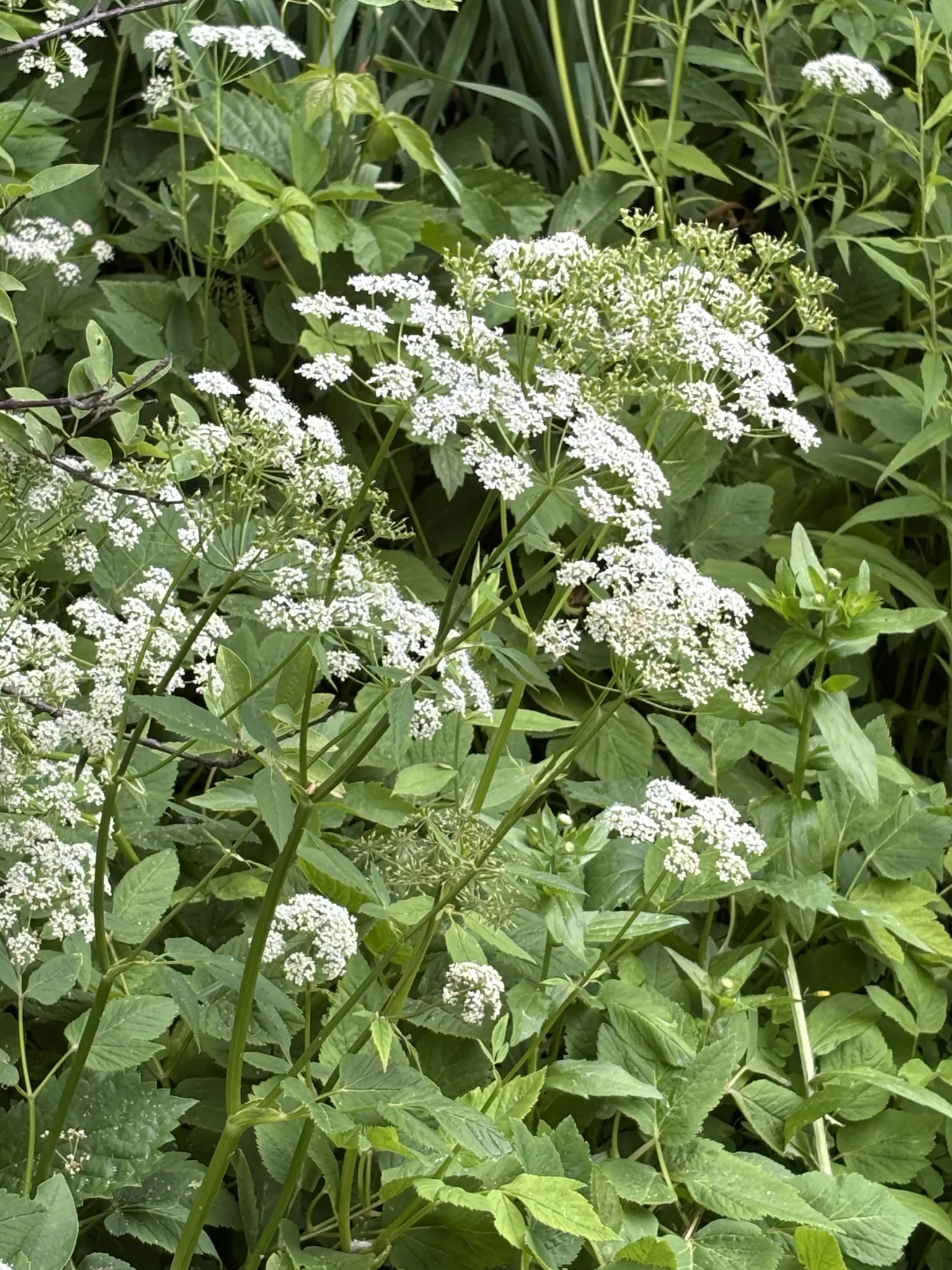
From a distance, its white flower clusters on tall stems can look like poison hemlock or water hemlock. Those are in the carrot family: their flowers sit on spokes that spread from a single point, like an umbrella, and their leaves are finely cut. Valerian's flower clusters branch, its leaflets sit in one simple row, and its flowers smell sweet.
Gallery
Clusters of small white flowers on tall stems
Where it grows
Each hexagon shows how many times Valerian has been recorded there, from herbarium specimens, surveys and iNaturalist photos. Gaps can mean nobody has looked, not that the plant is absent.