Peppermint
Family: Lamiaceae - Genus: Mentha - Species: M. × piperita
Other names: Mint, Brandy Mint
Quick facts
- Uses
- Edible
- Medicinal
- Tea
- Edible parts
- leaf
- Type
- perennial herb
- Flowers
- Jul–Sep
- Height
- 30–90 cm
- Native to
- Europe (a garden hybrid)
- Habitat
- gardens, stream banks, wet ground
| Month | Observations |
|---|---|
| January | 0 |
| February | 0 |
| March | 0 |
| April | 0 |
| May | 1 |
| June | 0 |
| July | 10 |
| August | 38 |
| September | 33 |
| October | 3 |
| November | 0 |
| December | 0 |
Peppermint is the strongest-tasting of the common mints, and the source of most of the mint flavour in the world. It's a natural hybrid of water mint and spearmint. Like many hybrids, it rarely makes seed, so it spreads by runners instead, and it spreads well.
Plant it in a pot unless you want a mint lawn. It also escapes gardens and grows wild along streams and in wet ground.
How to spot it
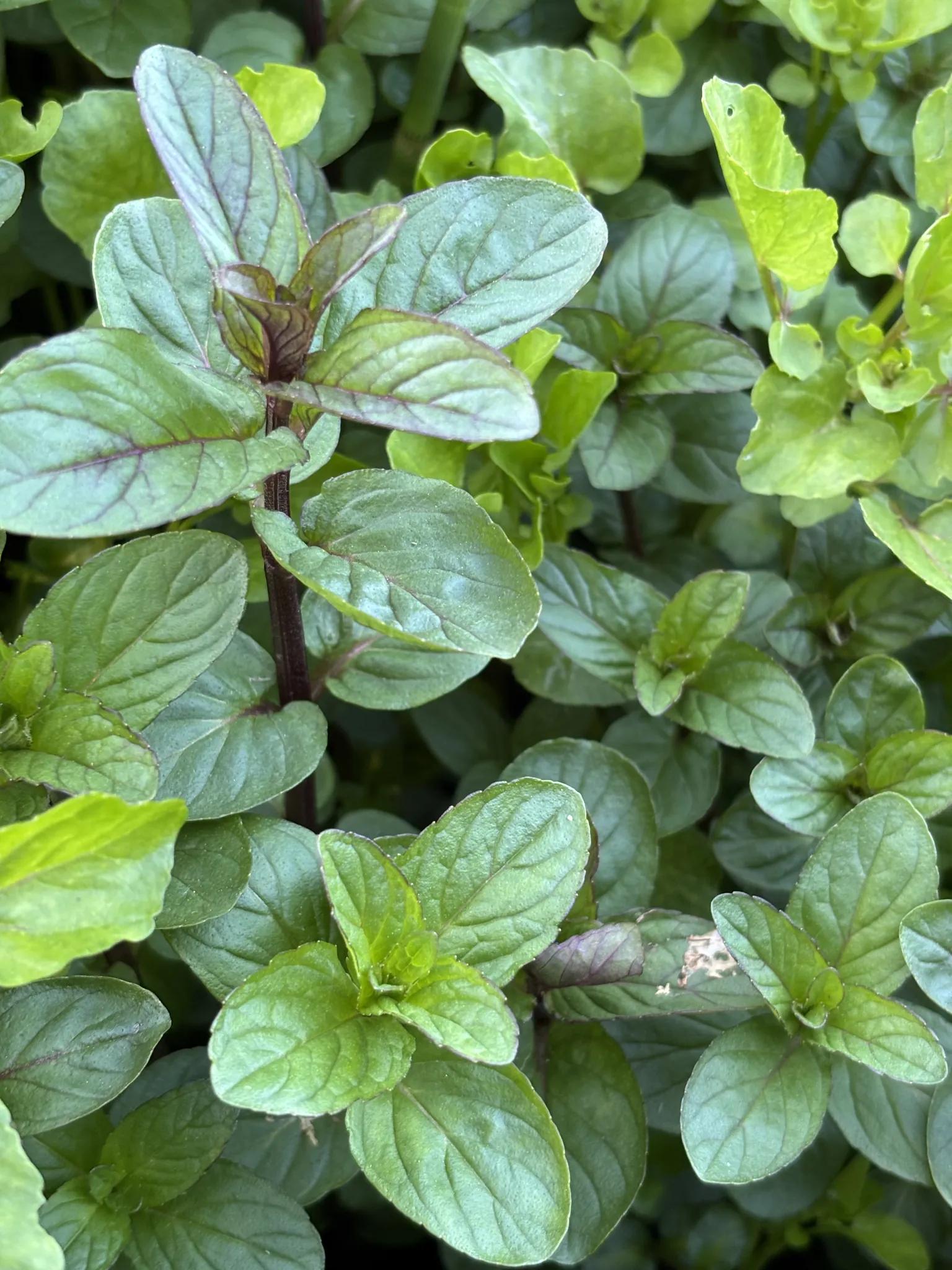
- Stems are square, like all mints, and often dark purple.
- Leaves grow in pairs. They're oval to lance-shaped, toothed and smooth, dark green and often tinged purple.
- Flowers are small and lilac, in spikes at the tops of the stems in late summer.
- The smell is the clincher: crush a leaf and you get a sharp, cooling menthol scent.
What it's good for
Fresh or dried, the leaves make one of the most popular herbal teas there is. It's an old remedy for indigestion, gas and nausea. There's good evidence that peppermint oil capsules help with irritable bowel syndrome.
In the kitchen, use it in teas, desserts, salads and sauces, or simply drop a sprig into cold water.
Telling the mints apart
Mints cross easily, and garden mints come in dozens of forms, so exact identification can be hard. Peppermint has smooth leaves on short stalks and a strong menthol bite. Spearmint has brighter green, more wrinkled leaves that sit almost directly on the stem, and a sweeter, milder taste.
Gallery
Dark, toothed leaves on purple stems
Where it grows
Each hexagon shows how many times Peppermint has been recorded there, from herbarium specimens, surveys and iNaturalist photos. Gaps can mean nobody has looked, not that the plant is absent.